
Priority reforms
EMHS continues to drive meaningful change through genuine collaboration with Aboriginal Community-Controlled Organisations (ACCOs).
Formal partnerships have been strengthened via a Memoranda of Understanding with Derbarl Yerrigan Health Service, Moorditj Aboriginal Corporation, local governments and 19 schools, alongside partnerships with Nganka Yira, Curtin University, Melbourne University, Nyoongar Outreach Service, Arche Health and 3 Aboriginal Community Advisory Groups.
EMHS is progressing new initiatives that place specialist staff within ACCO sites, ensuring timely, culturally safe care closer to home. Cultural safety remains a priority, supported by 5 strategic actions, including implementing Leave Events Action Plan, improved Aboriginal patient identification, reviewing the Aboriginal Health Champions Induction Program and strengthening policy compliance.
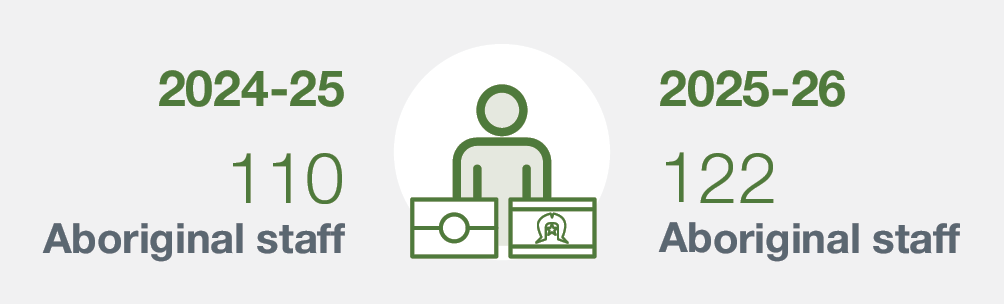
Delivering a strong, skilled and growing Aboriginal workforce, EMHS has developed 2 key documents to achieve this outcome – EMHS Aboriginal Employment Action Plan, with key actions to increase the Aboriginal workforce, and EMHS Cultural Capability Framework – Towards Cultural Safety: Our Development Framework to improve Aboriginal staff retention.
Socioeconomic outcomes and targets
EMHS reports against 8 of the 17 Closing the Gap targets, delivering targeted programs to improve life outcomes for Aboriginal people, families and communities. Cultural recognition has been embedded across EMHS sites through Noongar co-naming of Royal Perth Hospital (RPH) – Walbirring Karlup – and Armadale Hospital – Gangangarra. Numerous hospital wards, meeting rooms and Aboriginal programs also carry Noongar names, supporting cultural continuity and language revitalisation for future generations.
Tracking achieved outcomes
Outcome tracking reflects the diverse nature of EMHS services and programs. Clinical teams monitor performance through key performance indicators (KPIs), operational reporting, combined databases and service dashboards. Non‑clinical Aboriginal Health Promotion programs collect qualitative feedback via participant forms, interviews and face‑to‑face surveys, with program outputs recorded in dedicated databases and monitored through service dashboards.
Assessing effectiveness of the achieved outcomes
EMHS maintains a strong commitment to integrity, excellence and continuous improvement.
Effectiveness is assessed through internal audits, robust data governance, specialised databases and the collection of both quantitative and qualitative evidence.
Consumer engagement remains central, ensuring programs evolve in response to community needs and experiences.
These processes uphold high-quality health outcomes for Aboriginal staff, patients and communities.
Partnering for Aboriginal health
We are proud to be leading the State with our working relationships with Aboriginal Community Controlled Health Organisations.
In February 2026, EMHS signed a Memorandum of Understanding with the Moorditj Koort Aboriginal Corporation, a not-for-profit organisation providing Aboriginal-led health and wellbeing support.
This followed the signing of a similar agreement with Derbarl Yerrigan Health Service Aboriginal Corporation in November 2025, a not-for-profit providing culturally safe primary and other health services.
Both agreements are for health partnerships within the EMHS catchment. Responsibilities include identifying opportunities to work together, supporting service delivery and creating two-way learning opportunities for staff.
The partnerships focus on listening to Aboriginal people, exploring better ways to work together and improving health outcomes by reviewing and sharing results.
They have evolved from our ground-breaking EMHS Aboriginal Health Joint Committee which began in 2024, bringing together EMHS, Derbarl Yerrigan and Moorditj Koort executives to raise and discuss issues, challenges and opportunities.
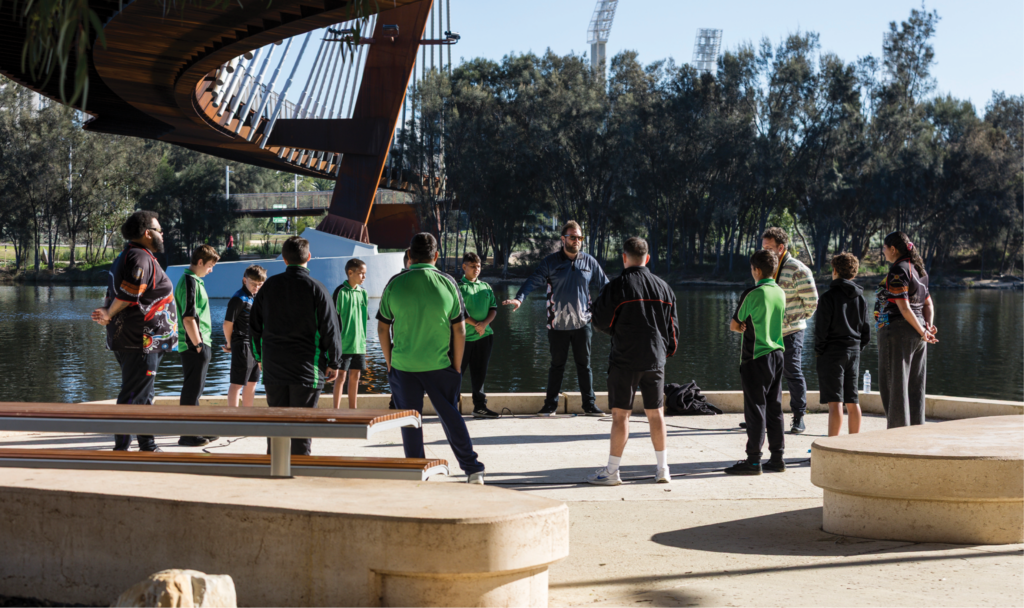
EMHS Area Director of Aboriginal Health, Francine Eades, said genuinely working together is a priority.
“The Closing the Gap approach is underpinned by the belief that when Aboriginal and Torres Strait Islander people have a genuine say in the design and delivery of policies, programs and services that affect them, better life outcomes are achieved,” Francine said.
“We acknowledge unprecedented shifts are needed to close the gap.
“Aboriginal and Torres Strait Islander people must determine, drive and own the desired outcomes, alongside all governments.”
“We acknowledge unprecedented shifts are needed to close the gap”