The WA Multicultural Policy Framework (MPF) 2020 translates the principles and objectives of the WA Charter of Multiculturalism (2004) into multicultural policy priorities, outcomes, strategies, and measures for WA public sector agencies.
The WA Charter of Multiculturalism demonstrates the WA Government’s commitment to multiculturalism and a multicultural policy position that embraces all of us, and is founded on 4 principles of civic values, fairness, equality, and participation.
In line with the MPF and EMHS’ ongoing commitment to provide culturally responsive services and welcoming and inclusive workplaces, the EMHS Multicultural Plan 2024-2027 (the Plan) has been developed in consultation with internal and external stakeholders, including the EMHS Multicultural Advisory Group. Examples of EMHS’ achievements against the priorities of the Plan are outlined below.
Priority 1: Harmonious and inclusive communities
To support a strategic and sustainable approach, a new governance model has been developed, including establishment of an executive level Diversity, Equity and Inclusivity (DEI) Committee. The DEI Committee will have oversight and accountability for the ongoing delivery of the Plan.
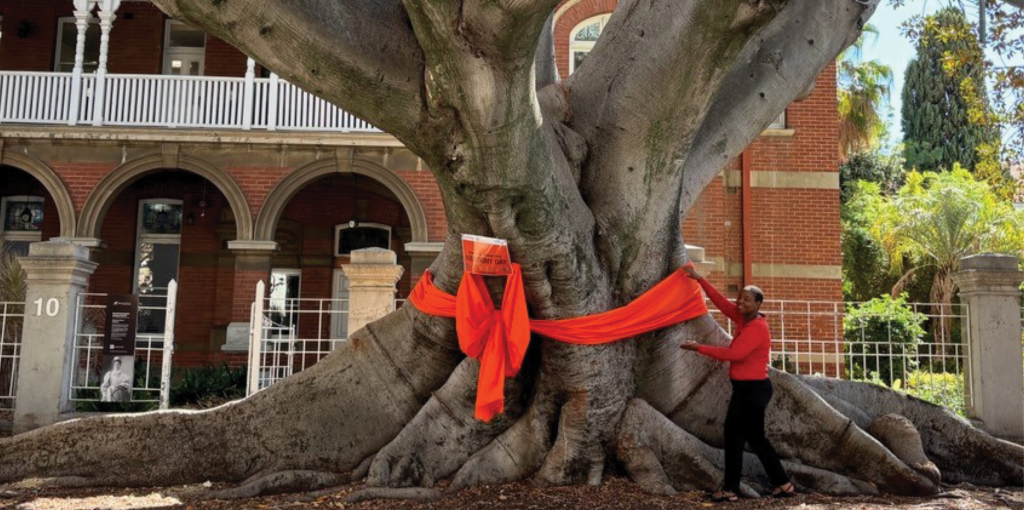
EMHS celebrates cultural events including NAIDOC, Reconciliation Week and Harmony Week across sites and services. As part of Harmony Week 2026, staff participated in Wear Orange Day on Wednesday 25 March, where an orange ribbon was tied around the giant fig tree at the front of the historical Kirkman House.
EMHS has a range of services across its sites designed to meet specific cultural needs, such as language, dietary and religious requirements. Interpreting and translation services are promoted and available across EMHS sites and requirements for interpreter usage are embedded into policies and procedures.
Priority 2: Culturally responsive policies, programs, and services
- All Western Australians are informed of, and have equitable access to, government services.
- Programs and services are culturally appropriate and responsive to the needs of all Western Australians.
- Customised culturally and linguistically diverse (CaLD) specific services are provided for those who need them.
- A workforce that is culturally competent and representative of its community and business and client needs.
Modesty Shawl Pilot Project was established in partnership with EMHS Community and Population Health, BreastScreen WA and Ishar to co-design a culturally appealing screening shawl for CaLD women to use while having a screening mammogram. The aim of this pilot is to increase regular participation in breast screening by addressing barriers associated with cost and modesty. A total of 550 shawls have been ordered as part of this project and women who are eligible to participate will be gifted the shawl after their mammogram.
The CaLD Women’s Wellbeing Initiative (CWWI) was established in October 2025 as a partnership with EMHS Community and Population Health (CPH), Ishar, Muslim Women Support Centre (MWSC), Communicare and Multicultural Services Centre WA (MSCWA) to collectively address identified CaLD women’s priority health needs, initially within the City of Canning and City of Gosnells. CWWI works collaboratively on initiatives within the Canning and Gosnells cities, which aim to address the priority health needs and strengthen access to health information and support services for CaLD women and their families in these communities.
The Strong Women Strong Families community event was held on 9 April 2026 for CaLD women promoting the message screening saves lives. This was a CWWI partnership event collaborated with national cancer screening services including Cancer Council, WA Bowel Cancer Screening, BreastScreen WA, Lung Cancer Screening Program and WA Cervical Cancer Prevention Program, as well as City of Canning and Town of Victoria Park.
Bilingual Health Educator Training conducted sessions to Ishar’s bilingual health educators to deliver culturally sensitive and accurate cancer screening information.
Priority 3: Economic, social, cultural, civic, and political participation
- Western Australians from CaLD backgrounds are equitably represented in employment and on boards, committees, and other decision-making bodies.
- WA’s CaLD community is harnessed to grow economic, social, cultural, civic, and political development.
EMHS CPH continues its partnership with Ishar, Communicare, MWSC and the CaLD Women’s Health program in the City of Canning (launched 2024-25), which aims to provide culturally appropriate health education and physical activity opportunities to women from the Canning and Gosnells area. The full program has been delivered to approximately 117 participants across 18 sessions, including walking groups, Zumba and yoga. The program increases motivation to engage in daily movement.
In partnership with Youth Futures, EMHS CPH supported a Youth Week grant for the Young Chefs Big Stories project, based on a youth-led initiative at Altone Youth Centre (AYC) where 12 to 17-year-olds cooked and shared their cultural recipes. Many young people in the Altone/Beechboro and surrounding areas struggle with cultural disconnection, identity issues, and food insecurity. This project aims to strengthen a sense of community, culture and belonging for these young people and celebrate the strength in their stories through the formulation of a recipe booklet.
Multicultural Community Garden City of Belmont supports fortnightly community garden sessions where CaLD communities can develop practical skills in gardening, healthy cooking, and self-care, contributing to improved food security. Sessions are coordinated by a nominated member, with WhatsApp as the preferred communication channel. This is a co-design partnership with EMHS CPH, City of Belmont and the city’s CaLD community.
Tools and resources are available to all EMHS staff on a newly developed Sharepoint (intranet) page, including access to cultural competency training, resources to help engage with consumers, and resources for CaLD staff and managers.