Learning from clinical incidents
EMHS is very proud of the significant improvements we continue to make in improving the quality of health service provision and providing safe and high-quality care for our patients and consumers.
It is recognised however, that in such a complex and challenging environment, sometimes things can go wrong while accessing a hospital or health facility. EMHS is committed to finding out what happened, why it happened and how we can make changes to help prevent or reduce the risk of a similar incident occurring again.
During 2025-26, there were 201,688 patient admissions to EMHS hospitals. In addition, 212,139 patients were seen in our emergency departments and another 611,784 patients were seen in an outpatient clinic or setting.
As a testament to our professional and skilled workforce, the overwhelming majority of these interactions occurred without incident. However, for a very small percentage of patients, errors did regrettably occur during their care – and in some cases, these errors resulted in unintended harm.
In the interests of transparency, we are sharing the number of serious clinical incidents that occurred in 2025-26 at our hospitals and health services.
During the reporting period, there were 138 clinical incidents reported with a Severity Assessment Code (SAC) rating of 1 (SAC1). A SAC1 incident is a clinical incident that has, or could have, caused serious harm or death, and which is attributed to health care provision (or lack thereof) rather than the patient’s underlying condition or illness.
The number of SAC1 incidents is attributed to an increase in activity and a strong culture of reporting. The most reported types of incidents include infection control, patient accidents/falls and delay in recognising/responding to physical clinical deterioration. All SAC1 clinical incidents are subject to a rigorous investigation with the reports being reviewed by members of the EMHS Executive, providing an opportunity for all EMHS hospitals to learn from incidents to improve the quality of care delivered across EMHS.
Morbidity and mortality (M&M) review is a forum for clinicians to openly and transparently discuss the quality of care provided to patients who have died or experienced significant morbidity while under the care of a health service. EMHS continues to identify opportunities for quality improvement and organisational learnings through the sharing of outcomes from M&M forums.
EMHS continues to actively participate in healthcare associated infection (HAIs) surveillance programs including the monitoring of hospital acquired blood stream infections (HABSI), enabling learning from current practice.
Of the 138 serious incidents reported in 2025-26, the patient outcome* was noted as:
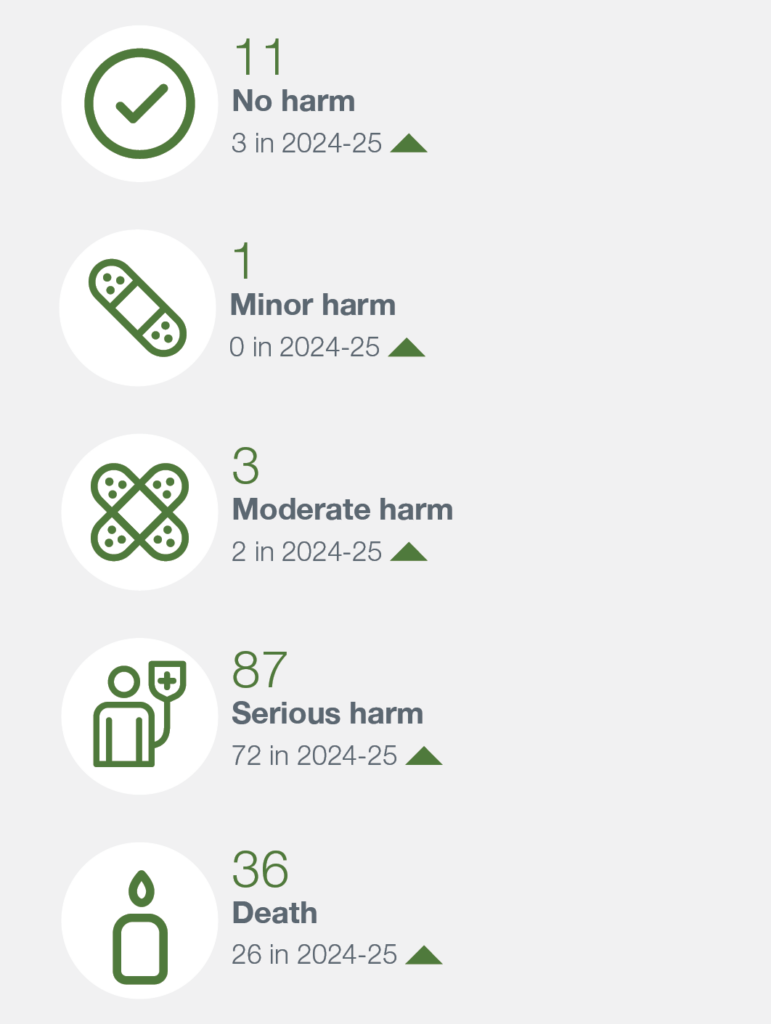
*The outcome does not necessarily arise as a direct cause of the incident. Factors other than healthcare-related may have contributed to the patient’s outcome.
Note: excludes ‘declassification approved’ SAC1 incidents deemed not to be the fault of the health service.
A future with fewer falls – Safe Recovery Program
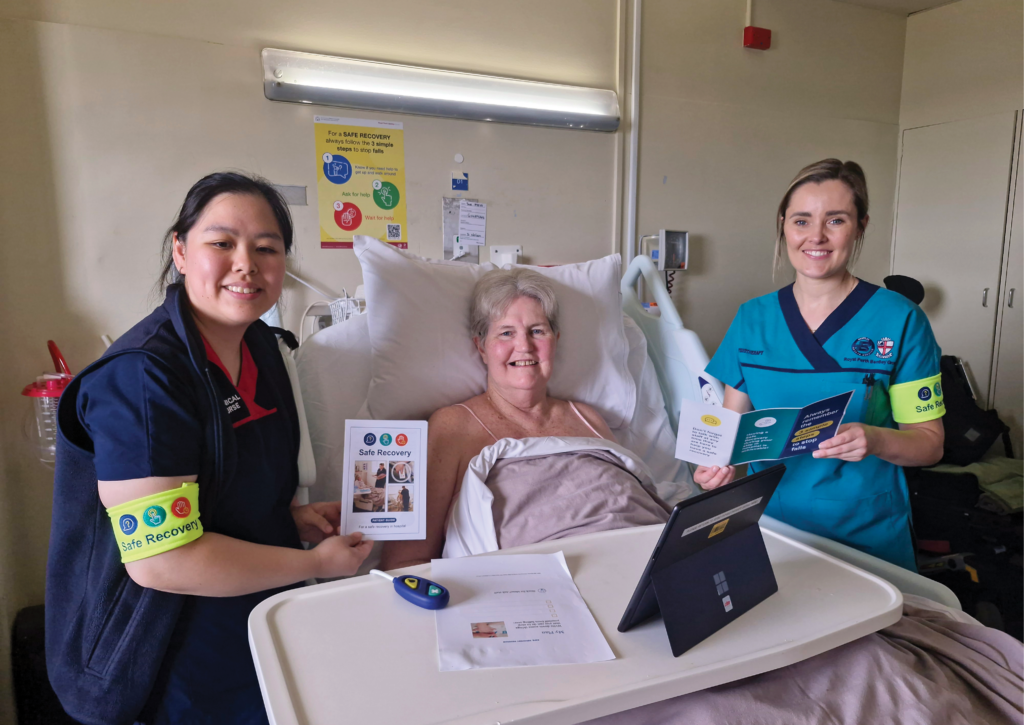
A new education program to reduce patient falls – a leading cause of injury-related hospitalisation – has been helping patients and staff at Royal Perth Hospital (RPH) better understand ways to prevent falls.
The Safe Recovery Program is a research project led by the University of Western Australia (UWA) and funded by the Federal Government’s Medical Research Future Fund.
The project began at RPH in December 2025 and will run until October 2026. Wards in the trial include older adult medical wards 9A and 7A, and 3H, a surgical ward for orthopaedic and trauma care.
So far, more than 750 patients have received falls education from a physiotherapy assistant, guided by physiotherapy staff. Each session is tailored to the patient’s needs and helps them understand their fall risk, mobility and personalised safety plan.
Around 150 staff members have also completed additional training based on World Falls Guidelines, focusing on early identification of risk and personalised care.
With falls prevention now a shared responsibility on the wards, there is better teamwork across nursing, allied health and medical staff. Prior research has shown that the program can reduce falls by up to 40 per cent when staff work together.
EMHS is one of 3 health services involved in the $1.4 million trial. The project is being led at RPH by UWA Professor Anne-Marie Hill, with support from a multidisciplinary team at RPH. It is delivered by Senior Physiotherapist Elisabeth Nolan and Clinical Nurse Vivian Liong.
Falls are the leading cause of injury hospitalisation in Australia, making up about 43 per cent of injury-related admissions, according to the Australian Institute of Health and Welfare

Promoting a healthy community
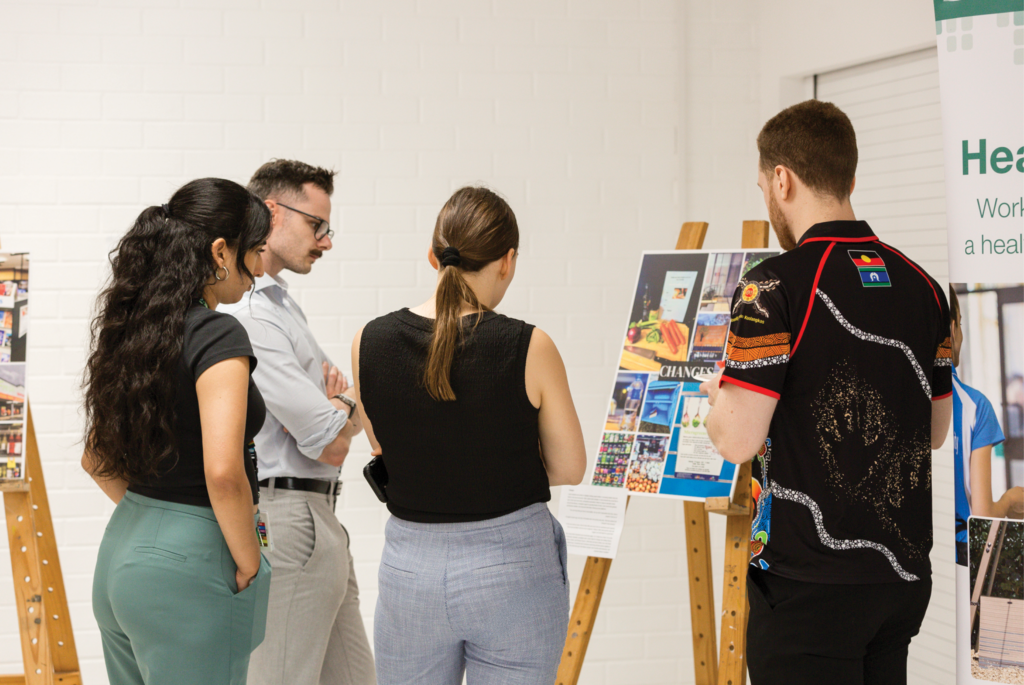
The EMHS Community and Population Health’s Obesity Prevention Strategy (OPS) 2020–2025 provided a coordinated, evidence-informed approach to address overweight and obesity across the EMHS catchment. Through partnerships with local governments, universities, community organisations and government agencies, the OPS progressed 28 actions across nutrition, physical activity, healthy weight and priority population groups.
Over the 5-year period, the OPS utilised a multifaceted approach to address overweight and obesity. A primary focus was strengthening the evidence base for prevention and supporting local public health planning through research, food environment mapping and surveillance activities. Notable achievements included contributions to the WA Food Atlas, development of the Food Outlet Dietary Risk Assessment (FoDR) and Menu Assessment Scoring Tool (MAST), and initiatives that improved understanding of local food environments, food security and opportunities to support physical activity.
Within health service settings, the OPS supported healthier environments for patients, visitors and staff. This included implementation of the Healthy Options WA Food and Nutrition Policy across EMHS sites, alongside initiatives promoting physical activity and active travel. Active travel infrastructure assessments and workplace wellbeing initiatives contributed to environments that make healthy choices easier. In addition, the OPS advanced respectful and evidence-based approaches to healthy weight through the development of the SHIFT Guide, workforce education initiatives and the Adult Nonsurgical Weight Management Clinical Model of Care.
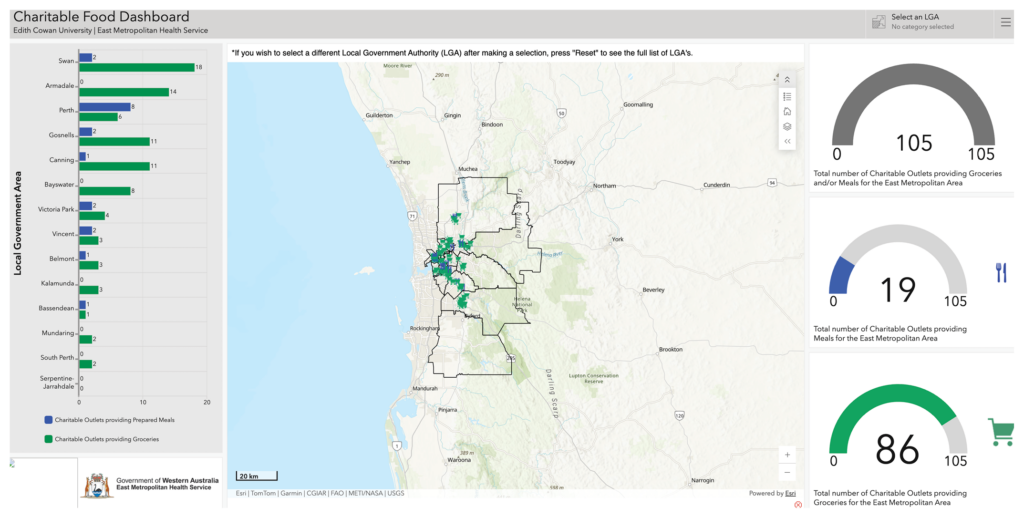
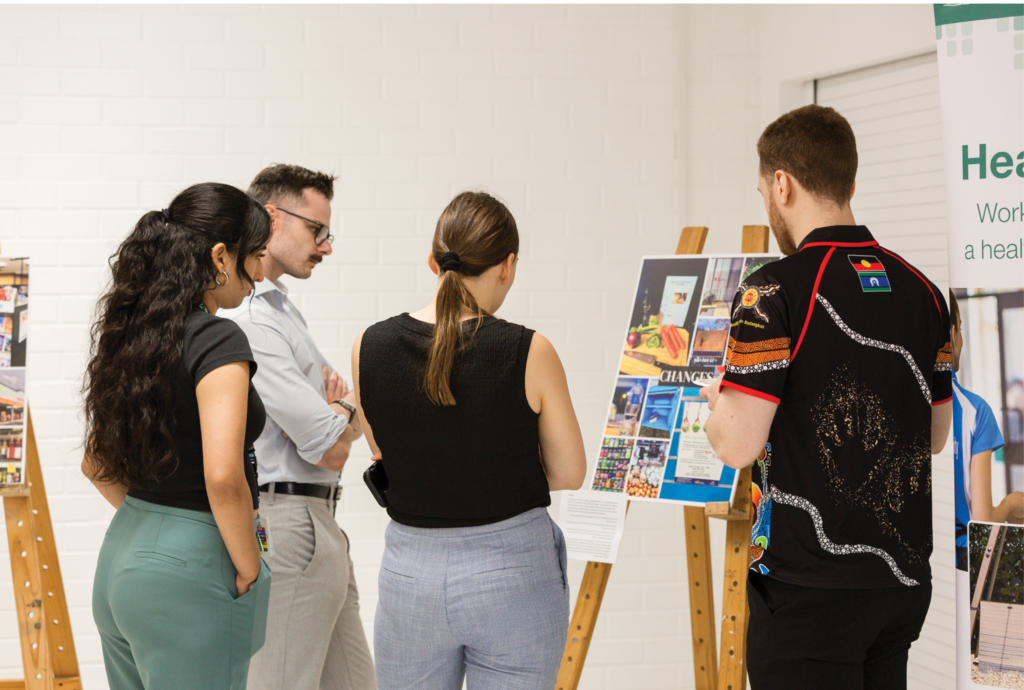
The final OPS Report highlights several significant initiatives delivered during the 2025–26 financial year that contributed to health equity, strengthened community food security and supported healthy lifestyles. Key highlights included the co-design and launch of the Aboriginal Community Cookbook, progression of the Food Access and Affordability Basket survey, and development of the Charitable Food dashboard.
Priorities for 2026 and beyond
Building on the foundations established through the OPS, EMHS Community and Population Health will continue to focus on 3 key areas:
- addressing food insecurity
- creating environments that support healthy eating and physical activity
- strengthening community-led and culturally safe approaches to prevention.
Future efforts will prioritise evidence-informed actions to improve food security, support healthier food and built environments, and reduce barriers experienced by priority populations, including Aboriginal peoples and culturally and linguistically diverse communities. Working with local governments, community organisations and research partners, EMHS will continue to strengthen prevention-focused initiatives that support health equity, improve wellbeing and long-term health outcomes across the EMHS catchment.
Charitable Food dashboard highlight
At the request of the food relief sector, and in response to increasing demand associated with ongoing cost-of-living pressures, EMHS Community and Population Health partnered with Edith Cowan University to develop an interactive Charitable Food dashboard. Supported by data collection undertaken in collaboration with the WA Council of Social Service (WACOSS), the project developed a prototype geospatial map to identify and categorise emergency food relief, meal services, and meal preparation and delivery programs across the EMHS region. The prototype was presented to local governments to gather feedback on usability and applications for planning and service delivery. This work provided the first comprehensive overview of charitable food services across the 13 local government areas within the EMHS catchment, strengthening understanding of service availability and distribution.
The project highlighted the potential of geospatial mapping to support evidence-informed planning, identify service gaps and underserved communities, improve awareness of available supports, and inform action to address food insecurity. The data also has practical value for food relief organisations, enabling targeted service planning, better resource allocation, and improved access to food relief for communities experiencing the greatest need.
Future work will focus on further developing the Charitable Food dashboard, supporting its uptake across the EMHS region, and working with local governments and community partners to translate insights into actions that strengthen food security, improve service accessibility, and support equitable access to food relief services.